
Comprehensive Training Programs
Our training programmes support humanitarian organisations, NGOs, and international teams operating in high-risk and fragile environments. Courses are designed for professionals responsible for duty of care, operational decision-making, and staff safety — including NGO security managers, security advisors, programme managers, logistics leads, and field leaders working in complex operating environments.

Security, Risk & Crisis Management (SRCM)
Designed for NGO security managers, senior advisors, and decision-makers responsible for organisational risk, crisis leadership, and duty of care.
Our Security Management programmes develop the capability to assess, manage and mitigate risk in complex operating environments. Training focuses on threat and risk assessment (TRA/TRAM), security planning, operational decision-making, and the practical application of duty of care for organisations operating in fragile and high-risk contexts.
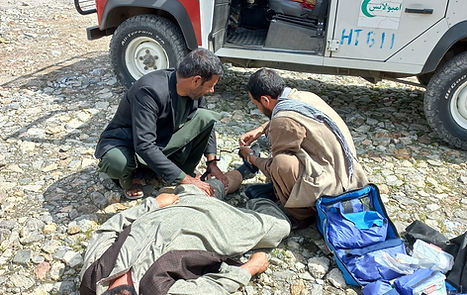
Hostile Environment Awareness Training (HEAT)
Designed for humanitarian, NGO, media, and corporate personnel operating in hostile or unstable environments.
Hostile Environment Awareness Training equips personnel with the knowledge and practical skills required to operate safely in high-risk and unstable environments. The course covers situational awareness, personal security, movement planning, hostile threat mitigation, and survival principles for humanitarian, media and corporate deployments.
Courses are delivered in the UK and internationally, supporting UK-based NGOs and global humanitarian organisations.
If you want to talk through context, suitability, or organisational fit before booking, we’re happy to have an honest conversation.
Humanitarian operations in fragile and high-risk environments — logistics, distributions, access, and duty-of-care decision-making in practice.


Humanitarian logistics delivery of non-food items in a conflict-affected environment, demonstrating supply chain and duty-of-care considerations.

Humanitarian distribution point with staff coordinating aid access and documentation under security constraints.

Local civilians collecting water during humanitarian assistance operations in a fragile urban environment.